infinite hearsay
ˈinfənət ˈhirˌsā
Overwhelming unsubstantiated information which threatens the production and communication of true knowledge.

Whataboutism 101
Someone I used to know has been caught up in hearsay and conspiratorial thinking for almost as long as I can remember, and as you might imagine, today’s information landscape hasn’t helped their condition. They write publicly under a pseudonym, and I thought their latest post deserved a closer look. Whataboutism is the theme of the day.First, a definition: what·a·bout·ismThe technique or practice of responding to an accusation or difficult question by making a counteraccusation or raising a different issue. Logically, it operates as a red herring and, in its tu quoque variant, constitutes a form of ad hominem. It …
KEEP READING
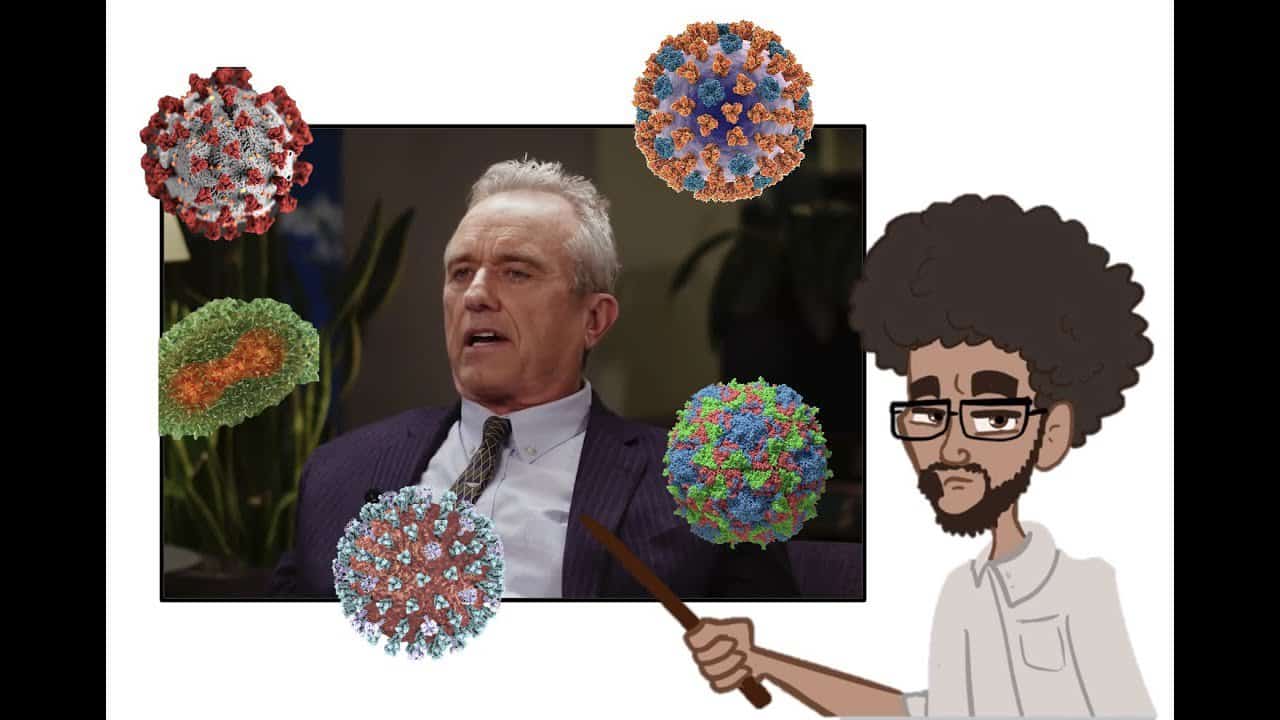
RFK Jr.’s Absurd Response to the Best Aluminum Vaccine Safety Study Available
The Danish government funded the largest, most comprehensive study on the safety of aluminum in vaccines. It was published in the Annals of Internal Medicine on July 15, 2025. A full version of the paper can currently be found here: https://autismsciencefoundation.org/wp-content/uploads/2025/07/andersson-et-al-2025-aluminum-adsorbed-vaccines-and-chronic-diseases-in-childhood.pdf The study had over 1 million participants between 1997 and 2018. Its conclusion: This nationwide cohort study did not find evidence supporting an increased risk for autoimmune, atopic or allergic, or neurodevelopmental disorders associated with early childhood exposure to aluminum-adsorbed vaccines. For most outcomes, the findings were inconsistent with moderate to large relative increases in risk, although small relative …
KEEP READINGABOUT
In a world where we rely on others’ knowledge and expertise for almost everything, knowing what we know is more complicated than ever.
I aim to highlight the problems facing modern information and knowledge and offer thoughts and resources regarding how to build confidence in our personal and communal understanding of the world.
Articles About Disinformation

Moral Outrage Porn

RFK Jr.’s Big, Ugly Polling Deception

The Big Money Behind the Big Lie

The Facebook Files
Books About Disinformation
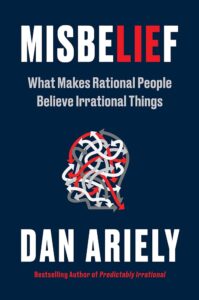
Misbelief
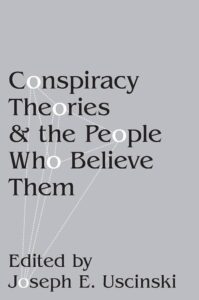
Conspiracy Theories and the People Who Believe Them

Echo Chamber
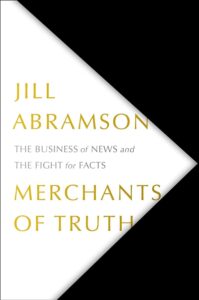
Merchants of Truth
Videos About Disinformation

The Truth vs. Alex Jones

Love Has Won (Documentary)
Best Disinformation Quotes
Lee McIntyre in The Scientific Attitude
Many scientists have found it incredible in recent years that their conclusions about empirical topics are being questioned by those who feel free to disagree with them based on nothing more than gut instinct and ideology. This is irrational and dangerous. Denialism about evolution, climate change, and vaccines has been stirred up in recent years by those who have an economic, religious, or political interest in contradicting certain scientific findings. Rather than merely wishing that particular scientific results weren’t true, these groups have resorted to a public relations campaign that has made great strides in undermining the public’s understanding of and respect for science. In part, this strategy has consisted of attempts to “challenge the science” by funding and promoting questionable research – which is almost never subject to peer review – in order to flood news outlets with the appearance of scientific controversy where there is none. The result … Read more
David Michael in Triumph of Doubt
Thanks to litigation, literally millions of pages of internal tobacco industry documents have given us a new understanding of how tobacco and the Koch family (through Citizens for a Sound Economy and other vehicles) have bankrolled and directed a powerful anti-regulatory campaign in the name of increased freedom and getting the government “off our backs”. (Not coincidentally, this litigation also found the tobacco industry guilty of violating federal racketeering laws.) Through these documents, we learned that the Tea Party did not spontaneously spring up in opposition to the Affordable Care Act (aka Obamacare) in 2009. Philip Morris first developed the Boston Tea Party analogy for its grass roots operations in 1989 and continued to promote it through the 1990s. In 2002, Citizens for a Sound Economy started the U.S. Tea Party, registering the website [usteaparty dot com]. The organization was able to suddenly appear on the scene to oppose President … Read more
Carl Sagan – The Demon Haunted World (1995)
I have a foreboding of an America in my children’s or grandchildren’s time—when the United States is a service and information economy; when nearly all the key manufacturing industries have slipped away to other countries; when awesome technological powers are in the hands of a very few, and no one representing the public interest can even grasp the issues; when the people have lost the ability to set their own agendas or knowledgeably question those in authority; when, clutching our crystals and nervously consulting our horoscopes, our critical faculties in decline, unable to distinguish between what feels good and what’s true, we slide, almost without noticing, back into superstition and darkness.
Barbara Fister in The Librarian War Against QAnon
Those who spend their time in the library of the unreal have an abundance of something that is scarce in college classrooms: information agency. One of the powers they feel elites have tried to withhold from them is the ability to define what constitutes knowledge. They don’t simply distrust what the experts say; they distrust the social systems that create expertise. They take pleasure in claiming expertise for themselves, on their own terms. https://www.theatlantic.com/education/archive/2021/02/how-librarians-can-fight-qanon/618047
Whataboutism 101
Someone I used to know has been caught up in hearsay and conspiratorial thinking for almost as long as I can remember, and as you might imagine, today’s information landscape hasn’t helped their condition. They write publicly under a pseudonym, and I thought their latest post deserved a closer look. Whataboutism is the theme of the day.First, a definition: what·a·bout·ismThe technique or practice of responding to an accusation or difficult question by making a counteraccusation or raising a different issue. Logically, it operates as a red herring and, in its tu quoque variant, constitutes a form of ad hominem. It should be said that raising different issues can be part of productive discourse, provided the process involves meaningfully exploring both the similarities and the differences between the original issue and the raised example. This is usually best accomplished through dialogue. When a different issue is raised and only the similarities …
KEEP READINGRFK Jr.’s Absurd Response to the Best Aluminum Vaccine Safety Study Available
The Danish government funded the largest, most comprehensive study on the safety of aluminum in vaccines. It was published in the Annals of Internal Medicine on July 15, 2025. A full version of the paper can currently be found here: https://autismsciencefoundation.org/wp-content/uploads/2025/07/andersson-et-al-2025-aluminum-adsorbed-vaccines-and-chronic-diseases-in-childhood.pdf The study had over 1 million participants between 1997 and 2018. Its conclusion: This nationwide cohort study did not find evidence supporting an increased risk for autoimmune, atopic or allergic, or neurodevelopmental disorders associated with early childhood exposure to aluminum-adsorbed vaccines. For most outcomes, the findings were inconsistent with moderate to large relative increases in risk, although small relative effects, particularly for some rarer disorders, could not be statistically excluded. This study is widely accepted among experts as the best available evidence on the question of safety of using aluminum in vaccines. On August 1, 2025, RFK Jr. published an op-ed on trialsitenews.com (more on this below) calling for …
KEEP READINGHow “Do Your Own Research” Became a Slogan for Epistemic Collapse
RFK Jr. announced this week that parents should “do their own research” regarding vaccinations for their children. Everyone should be encouraged to do their own research. It’s the only reasonable way to make informed decisions. But we all have limits—of time, knowledge, education, access to information, and cognitive capacity. If you’ve taken a Logic course or explored the subject casually, you’ll be familiar with the appeal to authority fallacy. This fallacy warns against accepting a claim solely because it’s endorsed by a perceived expert. And in the context of formal argumentation, that’s absolutely right. However, applying this standard rigorously to everyday decision-making would require endless specialized training and unlimited time. The reality is that no one can be an expert in everything. Even world-class specialists must rely on the authority of others for most of what they believe. Flat-earthers often subscribe to a philosophy resembling epistemic solipsism: they trust only …
KEEP READING